



Surgical Drains After Breast Surgery
What You Need to Know to Prevent Infection
Jean Campbell, MS, is a breast cancer survivor and advocate, and the founding director of the American Cancer Society Patient Navigator Program.
Updated on May 28, 2026
Medically reviewed by Archana Sharma, DO
Key Takeaways
- Wash your hands before and after taking care of your surgical drains to prevent infection.
- The color of the drainage should change from bright red to straw color after a few days.
- It is normal to have 100 cc of drainage per day early on, and this amount should decrease over time. You may have surgical drains in place for up to three weeks.
The Purpose of Drains
Surgical drains are important in healing after breast surgery. Fluid build-up where a breast is removed can cause discomfort and slow healing if not drained.
Drains also help prevent seromas, which are fluid collections that can cause discomfort and scarring. To help manage this, surgeons place drains in areas where fluid is likely to collect.
Drains can allow bacteria to enter the body, so it's crucial to keep the area around them clean and dry.
The most commonly used type of drain for breast surgeries is the Jackson-Pratt drainage system.2 These drains are placed in the surgical area and attached to flexible tubing that is stitched to your skin. The tubing connects to a soft plastic bulb that collects fluid outside your body.
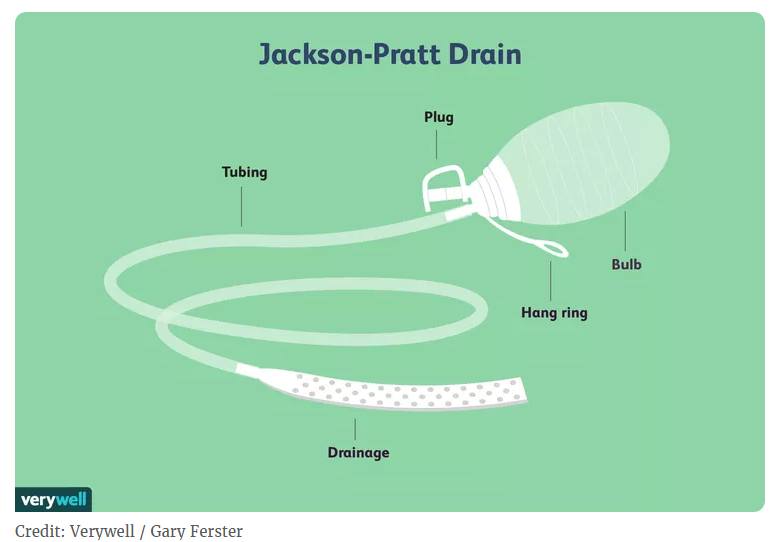
Most drains are left in place for two to three weeks, but some may be removed before you leave the hospital and others may need to be left in place for longer than three weeks. The risk of infection, however, begins to increase rapidly after drains have been in place for 21 days.
Surgeries That Typically Require Surgical Drains
Surgeries requiring drains are those in which fluid collects during healing. Drains are usually required following a mastectomy or reconstructive breast surgery. You may have only one drain, or you may have five or more if you have a bilateral mastectomy (in which both breasts are removed) with immediate reconstruction.
A separate drainage tube is often placed if you have a lymph node dissection. You will not usually need a drainage tube if you are undergoing a surgical biopsy, lumpectomy, or a sentinel node biopsy.
The location of your drains will depend on the surgery you have, but often includes a drain at your mastectomy site and one in your armpit if you have lymph nodes removed.
How to Care for Surgical Drains
After surgery, your recovery room nurse will explain the importance of being careful with your drains. The tubes are usually 14 to 18 inches long and can easily become tangled with IV lines or bedding.
Your nurse will periodically empty the bulbs and demonstrate the process. They will record the drainage amount from each tube, and you will need to keep this log until the drains are removed.
Before discharge, your healthcare team will review drain management, discuss symptoms that require medical attention, and schedule a follow-up visit for drain removal.
Emptying and Tracking Drainage
Wash your hands before and after each time you measure. Initially, you'll have about 100 cc of drainage per day, which should decrease over time. You may need to empty your drains two to four times daily or when they are about half-full.
Pay attention to the color and consistency of the drainage. It will be bright red at first but should change to a straw color within a few days. After emptying the bulb into the toilet, rinse it with water and gently compress it to recreate a vacuum when closing the system. It's helpful to have someone assist you with draining your surgical bulbs, if possible.
An increase in the amount of drainage may be a sign that you've been too active and need to take it easy for a few more days.
Keep the insertion site clean and dry by washing with soap and water and gently patting dry.
Signs and Symptoms of Infection
Having drains provides bacteria with an access route to your body, and the longer the drains are in place, the greater the risk of infection.
Signs of a drain-related infection may include:
- A fever with a temperature of 101 degrees F (38.3 C) or higher
- Redness of your skin surrounding the drain
- Hardness or firmness where the drain exits your body
- Thickening rather than thinning of the drained liquid
- Foul-smelling drainage or pus at the entry site
- Pain or discomfort at your drain sites
- A sudden change in the smell or color of the drainage
Keeping Drains in Place
One of the most difficult parts of having surgical drains is managing both the tubes and the drainage collection ports.
Having a special drain management garment can be a lifesaver. There are special cotton camisoles designed just for this purpose. A good one has pockets or pouches where you can insert the bulbs to keep them secure, is sturdy enough to attach and reattach safety pins to control the lines, and minimizes seams that could rub against your incision sites and be uncomfortable.
This keeps the drains secure so they don't pull on your wound site or swing freely and possibly catch on things. Some camisoles even have pockets in which you can insert soft cotton breast forms.
Other options include large, roomy blouses and oversized sweaters or sweatshirts that open in the front.
For some time after surgery, it may be difficult to pull clothing over your head, so keep this in mind when you shop. When you go to sleep, pay attention to the location of your drains.
It is possible for a surgical drain to come out; however, this is rare, as the tubing is held in place with sutures. If they do not hold and the tubing falls out, cover the spot with a clean bandage and call your healthcare provider.6
Daily Life With Drains
It's far too easy to catch your drain tubes on something if they are not secure. Stretching and pulling are also difficult for some time after surgery, especially with drains in place. Before your surgery, it's helpful to put commonly used items in a place where you won't have to stretch or bend to reach them. (This is also a good task to give to someone who is looking to help during this time.)
After surgery, additional adjustments to your daily life will be needed.
Driving
Surgeons differ as to recommendations about driving with drains, and some recommend avoiding it altogether.7 (You should also avoid driving if you are taking pain medications.) When you ride in a car, you may wish to position a small, soft, but relatively flat pillow between your surgical site and drains and your seat belt.
Bathing
Your surgeon will let you know how long you need to wait to bathe after surgery. Healthcare providers also differ with regard to bathing instructions. Some recommend you only do sponge baths until your drains are removed, though you may be able to use a detachable shower head to wash from your waist down.
Washing your hair can be a bit of a challenge due to limited motion in your arms, and it can be uncomfortable to lean over the sink. Some people find that treating themselves to a shampoo at a hair salon is a good option.
Soaking in a tub or entering a hot tub is not recommended while you have drains in place.8
Sleeping
You should not sleep on the same side as the drainage tube to avoid blocking the tubing or pulling it out of the attached bulb.9
Common Drain Problems
Problems that can occur with drains include:
- Clots in the tubing: On occasion, patients will find a clot in their tubing. If this occurs, try gently kneading the area.
- Loss of vacuum pressure: If a proper vacuum isn't created after emptying your bulb, your drain may fail to remove fluid. If this occurs, the build-up of fluid can be uncomfortable.
When to Call Your Healthcare Provider
You should call your surgeon if you have any concerns or questions, or if you develop any of the following problems:6
- Your drainage is bright red for more than two or three days.
- You develop any signs or symptoms of an infection as noted above.
- A large amount of fluid is leaking from where the drain tubing is inserted into the surgical site.
- Your drainage output suddenly decreases or stops abruptly.
- Your drainage becomes thicker rather than thinner as time goes on.
- Your bulb loses suction.
- Your drain falls out.
Having Your Drains Removed
Surgeons vary on the length of time they want drains left in place. Most recommend that drains be removed when there is less than 25 to 30 cc total coming from a drain in 24 hours.8 If you are still having more than 30 ccs draining after a drain has been in place for three weeks, the risk of infection appears to outweigh the benefit of leaving drains in place any longer.
Your surgeon will remove your drains by cutting the suture holding it in place and gently pulling out the tubing. You may notice a pulling sensation, but this only lasts a few minutes. Most people do not need any pain medications for this procedure.
Once your drain is out, ask your surgeon what kind of undergarments they recommend. Your bras should be supportive, comfortable, and not too tight. Underwire bras should be avoided.10
You will have small scars where the tubing exited your skin, but these often fade over time.